01
Wet Pipe
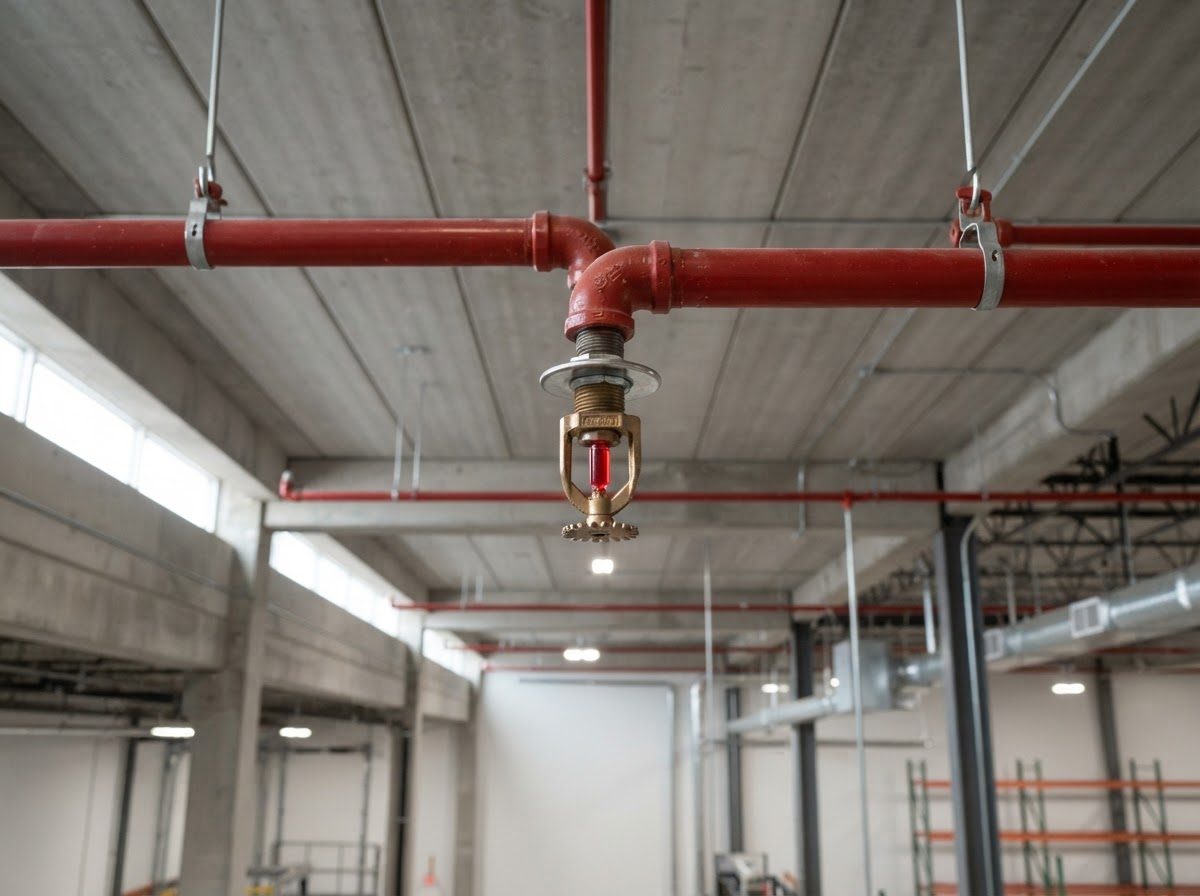
Water in the piping at all times. Fast, simple and the lowest maintenance.
Sprinkler System Types
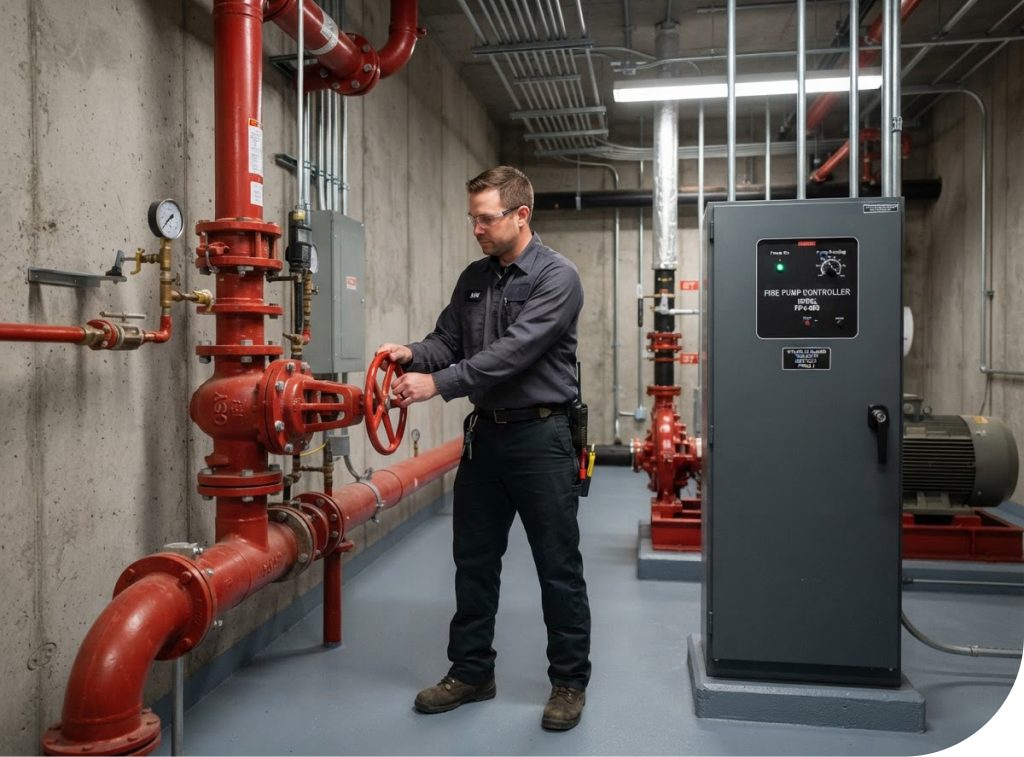
Wet, dry, pre-action, deluge, antifreeze, ESFR and in-rack systems. We help you choose the right system for each space, then design, install and maintain it.
Overview
Most buildings use more than one kind of sprinkler system. A heated office floor uses wet pipe, the parking garage below it needs dry pipe, and the server room might call for pre-action. Choosing correctly affects cost, maintenance and how the system behaves during a fire.
We look at temperature, occupancy, the value of what is being protected and how sensitive it is to water before recommending a system type.
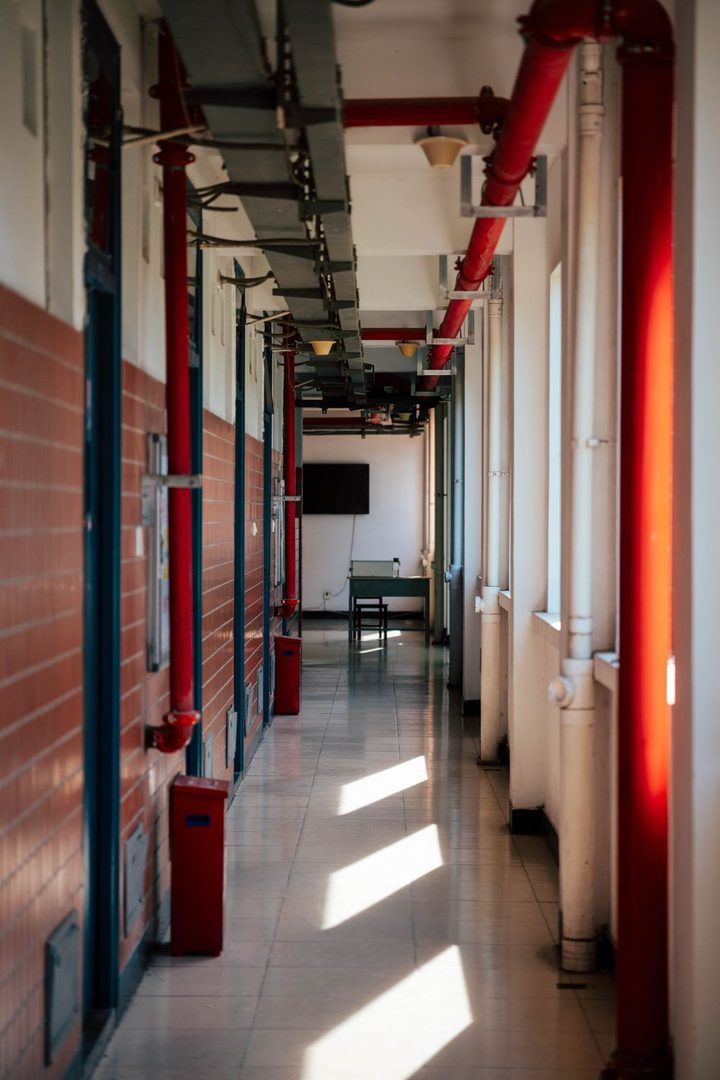
Freeze protection planned into every design.
What we do
01
Water in the piping at all times. Fast, simple and the lowest maintenance.
02
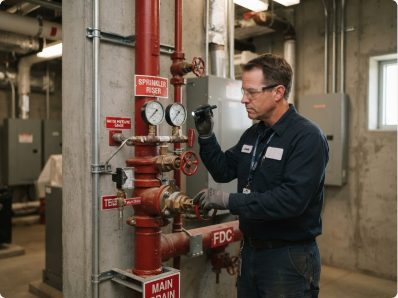
Pressurized air or nitrogen holds water at the valve until a sprinkler opens.
03
Requires a detection event before water enters the pipe. Used for data rooms and archives.
04
All sprinklers are open and discharge at once when detection activates.
05
Listed antifreeze solution protects small unheated areas off a wet system.
06
High-challenge storage protection designed around commodity and height.
Standards & frequency
We build these intervals into your service calendar, so tasks happen on time and records are ready when your fire marshal or insurer asks.
| System | Best for | Maintenance notes |
|---|---|---|
| Wet pipe | Heated offices, apartments, retail | Lowest upkeep; annual inspection and testing |
| Dry pipe | Garages, docks, attics, freezers | Low-point drains, compressor and annual trip test |
| Pre-action | Data rooms, archives, museums | Detection and valve testing; supervisory air |
| Deluge | Transformers, process hazards | Detection testing and full-flow trip tests |
| Antifreeze | Small unheated vestibules | Annual solution testing; listed solutions only |
| ESFR | High-piled and rack storage | Obstruction and clearance reviews when storage changes |
Designs follow NFPA 13 and the code edition adopted by your jurisdiction.
How it works
01
Temperature, occupancy and contents documented room by room.
02
A system type for each area, with cost and maintenance trade-offs.
03
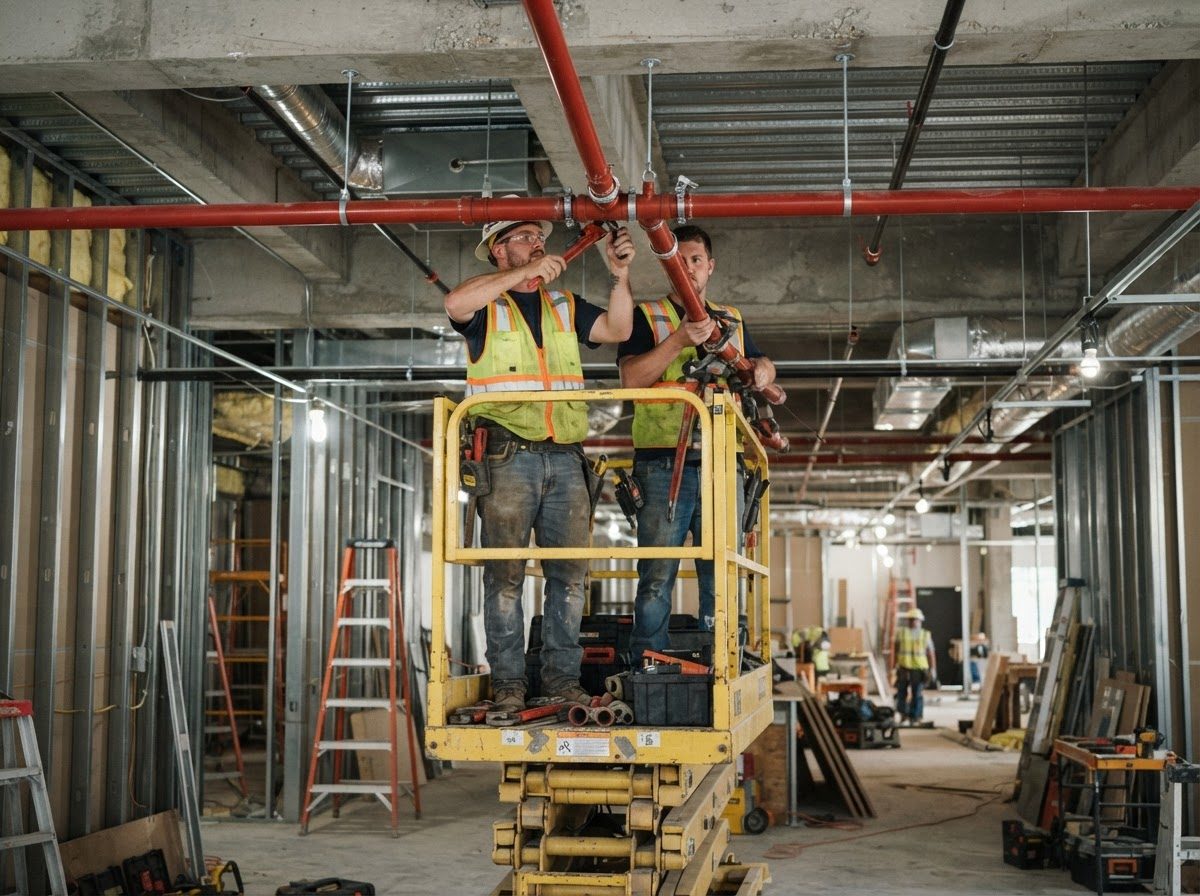
Hydraulic calculations, permits and installation.
04
Inspection tasks matched to each system type.
Questions
Have a question about your building? Call 218-262-9553 or send a request and a specialist will follow up.
Dry systems collect condensation at low points, which can freeze and crack pipe. Low-point drains need regular draining, especially before and during winter, and the air compressor and dry valve need annual testing.
If the area is now heated year-round, often yes. We verify heat, review the hydraulics and handle the permit.
Water enters the piping only when both a detection device and a sprinkler operate. It is used where accidental water damage would be especially costly.
Yes, with listed antifreeze solutions and annual testing. Many owners replace them with dry systems or heat when renovating.
Our 24/7 line connects you with an on-call coordinator who can dispatch a technician, help you plan fire watch, and document the impairment for your records.
218-262-9553
Emergency service